Organization: Oldman Watershed Council

Graphic with the text "Municipal News from the Town of Pincher Creek" on the left side, featuring a stylized image of people seated around a meeting table on the right.

News briefs from Aug. 24 Town of Pincher Creek council table

Pincher Creek town council approved up to $225,000 for a wastewater pump replacement and renewed its regional planning agreement during a wide-ranging meeting Aug. 24, which also touched on a rise in break-ins, staffing shortages at the local RCMP detachment and support for several community organizations.

The meeting opened with a presentation from the Pincher Creek and District Community Food Centre, which reported serving 427 people and completing 785 deliveries over the past fiscal year.

Food centre reports busy year

Board chair Davina Brown told council the food centre served 282 returning clients and 145 new ones over the past fiscal year. Children aged 18 and under made up the largest group of recipients, at 132.

The program serves Pincher Creek and surrounding communities, including Pincher Station, Beaver Mines, Lundbreck, Twin Butte, Castle Mountain and Cowley.

The centre also reported a $50,000 surplus for the fiscal year and said it has been accredited by Food Banks Canada.

Brown credited past town funding with helping cover delivery costs, including a monthly refrigerated truck run to Lethbridge.

The centre’s priorities for the coming year include surveying clients, strengthening financial reserves, improving board recruitment and increasing community engagement.

The centre plans to hold an open house on World Food Day, Oct. 16.

Ace of spades card on ad for Chase the Ace at the Pincher Creek Legion

Wastewater pump needs replacement

Council approved up to $225,000 from the utilities reserve to replace one of three pumps at the town’s main wastewater lift station.

The decision followed heavy rain in the spring that caused stormwater to seep into the sanitary system and exceed the lift station’s capacity.

The town had to use vacuum trucks to pump effluent from the lift station wet well and transport it to the lagoons. When the trucks were no longer available because of run-time restrictions, some effluent overflowed into the creek.

Administration reviewed the lift station and inspected all three pumps, finding all are at or near the end of their service lives. One was completely inoperable and could not be rebuilt.

Chief administrative officer Konrad Dunbar told council the failed pump has no off-the-shelf replacement and must be custom-built, with a lengthy lead time.

“Normally, I would try and save this for [the] budget process,” Dunbar said, but the order needs to go in soon if the town wants the pump installed before next spring. Most of the cost is not expected to come until 2027 and any funds not spent in 2026 will be allocated through the 2027 budget.

Council renews regional planning agreement

Council approved an updated 2026 membership services agreement with the Oldman River Regional Services Commission.

It combines and replaces three previous agreements covering planning services, regional assessment review services and the Chinook Intermunicipal Subdivision and Development Appeal Board.

Event poster for a Secondhand Dreamcar concert at the Empress Theatre on November 20, 2026, at 7:30 PM, featuring a photo of the band members.

Coun. Sahra Nodge said the updated agreement appeared to mainly bring the town’s existing arrangements in line with current practices and legislative requirements.

Mayor Wayne Oliver asked who would be responsible for enforcing conditions added to a development permit by the regional appeal board.

Dunbar said the town remains responsible for ensuring compliance with board decisions.

Nodge said the regional appeal board provides an independent appeal process while allowing municipalities to handle the follow-through locally.

Break-ins surge, other crime mixed

An RCMP report on crime statistics for April through June showed break and enters rose to 13 files from four during the same period in 2025. The detachment linked the rise to a wave of thefts targeting commercial sites for copper wire and said investigators identified suspects and laid charges.

Several other property offences also climbed. Fraud files rose from five to 12, while mischief cases involving property damage doubled to 10. Overall property offences increased from 45 to 67, though the detachment said the five-year trend remains within normal range.

Crimes against persons decreased compared to the previous year. Assault files fell from 15 to 10 and criminal harassment from six to three. Sexual assault files rose from one to two.

Total Criminal Code offences increased from 95 to 112.

Job ad for “Shootin’ the Breeze” seeks part-time and full-time staff for photography, writing, and reporting; contact publisher@shootinthebreeze.ca. Background shows printed news text and a hand holding a voice recorder.

Traffic enforcement was active during the quarter, with 223 tickets issued. Many were tied to tourism traffic and a highway construction zone south of town.

RCMP staffing remains an issue

The detachment reported five officers working out of 11 established positions. Three officers are on temporary leave and there are three hard vacancies. The report said two constables and one corporal are expected to transfer into the detachment in the fall.

Council discussed asking for a meeting with the RCMP K Division commander at the Alberta Municipalities convention in September, continuing years of talks over the town-owned detachment building. The town has previously explored the possibility of the RCMP taking ownership.

Dunbar said the building has experienced some settling but no longer appears to be undergoing the significant movement seen in its early years.

Coun. Bernice Cyr raised separate concerns about new recruits and about unanswered questions on drug enforcement and elder abuse raised at police advisory meetings. Oliver will attend the next meeting with Cyr to better understand the concerns.

Council backs watershed, AI initiatives

Council agreed to send a letter supporting the Oldman Watershed Council’s request for renewed provincial funding.

The OWC’s current four-year core grant provides $320,000 annually and accounts for about 20 per cent of its operating budget. The funding is set to end March 31, 2027.

Council also agreed to support Community Futures Alberta Southwest’s application for funding for a proposed Rural AI Accelerator program.

The program would help rural businesses, entrepreneurs, organizations and municipalities understand and adopt artificial intelligence for day-to-day operations.

Councillors approved for conferences

Council approved Coun. Valerie Wynder’s attendance at the Tourism Economic Leaders Forum dinner and gala awards in Edmonton on Nov. 16.

Wynder said the event could provide an opportunity to learn more about tourism development and bring ideas back to the region.

Council also authorized Cyr and Wynder to attend a course on effective meetings at the Alberta Municipalities convention. The $425 course will cover meeting procedures, motions, debate, conduct and decision-making.

Coun. Sahra Nodge received council’s support to apply for an Alberta Municipalities committee position.

Library update

Council received an update from the Chinook Arch Regional Library board about changes to the Alberta Libraries Act and Regulation. The changes require libraries to restrict access to certain materials based on age, with policies and procedures due by Jan. 1, 2027.

Libraries, Property Crime, RCMP Staffing, Regional Planning, Rural AI, Wastewater Infrastructure

Three white envelopes blow in the wind in front of an open grey mailbox on the heading for Shootin' the Breeze Mailbox articles and letters to the editor.

Opinion: The Oldman cries for help

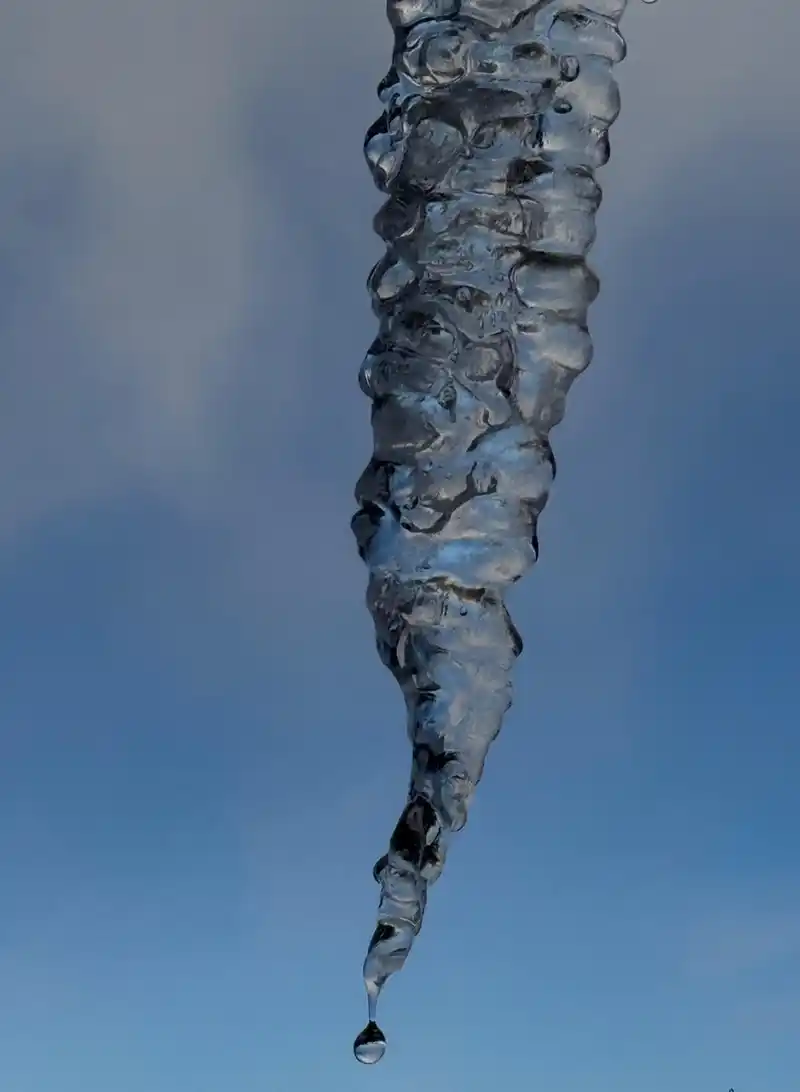
A close-up of a clear, textured icicle with a droplet of water forming at its pointed tip, set against a blue sky with faint clouds in the background.
An icicle attempts to feed and nurture the Oldman’s drought-stricken forests, and Alberta’s insatiable thirst for increasingly unavailable water. | Photo by David McIntyre

Opinion: The Oldman cries for help

David McIntyre – Crowsnest Pass


The drought-stricken Oldman is dying.

Here in the fractured heart and soul of the Oldman’s headwaters, taxpayers have spent billions to transform a wealth of heaven-on-earth, Crown of the Continent world-renowned intrigue into a land of mud, stumps, rutted roads and clearcuts.

I shed tears into this soil-compacted sea of loss.

The government, incongruously, stands in defence of this false picture of progress. It does this by demanding that we continue to pay for a fabricated—highly subsidized!—forest products economy and, with it, the ongoing destruction of a priceless and irreplaceable headwaters watershed worth billions.

My home on the eastern gateway to Crowsnest Pass places me in view of this madness. Here, the Crowsnest River valley defines the Rocky Mountain’s thin, narrow waistline, home of Alberta’s rarest, most tree species-diverse forest.

Trees grow here that are found nowhere else in Alberta. There are huge, thickly-barked Douglas-firs, elegant western white pines, two species of native larch, western redcedars, Rocky Mountain junipers, and ancient, gnarled, hauntingly beautiful limber pines and whitebark pines, some likely more than 1,000 years in age.

Within this gorgeous, species-diverse headwaters forest, a harvesting company’s profit is founded on society’s costly uphill attempts to do the impossible: keep a thirsty, water-deprived, mid-elevation matchstick forest of lodgepole pines and white spruces alive for a long century or more, until these little trees can be transformed into 2X4s.

The biggest problems within this tainted picture: insects and fire. A virtual army of hungry forest pathogens feasts on this vast buffet table of matchstick timber. They do this as wildfires start, then race through a banquet of kindling.

Get Stuff’d meat and seafood shop sign, located at 214 13th St. in Fort Macleod, open Thursday through Saturday from 12 noon to 6 p.m., phone 368-996-1968, follow us on Facebook at Get Stuff’d.

It’s the government’s taxpayer-funded, profoundly expensive attempts to transform a dry forest of dog-hair timber into a viable forest industry that’s created a perfect storm.

Within this warped and twisted picture—it’s defined by perpetual watershed loss and headwaters forest manipulation and destruction—the government now asks Albertans to come to the table to discuss a burning need.

It’s not the urgent need to protect the Oldman’s vital—essential to life—multi-billion dollar watershed from decades of costly forest mismanagement. The need, we’re told, is to pay logging companies even more. We’re being asked to endorse the killing of Alberta’s rarest forest at its westernmost edge. We’re told we must destroy this forest at the Oldman’s hydrological apex in an attempt to save communities from the wildfire danger that’s been created.

How might the government best convince Albertans to accept this sudden—and burning— need? There’s no better way than through our innate fear of wildfire.

The government knows that, following long decades of phenomenally costly wildfire prevention efforts, it has created the kindling and fuel to feed a devastating, wind-whipped inferno. Wide-eyed and frightened, government forest managers now offer us false salvation from this red dragon, a dragon they created.

They prescribe a “simple”—clearcut!—overnight fix. The fact that this distracting placebo offers little in terms of meaningful merit is irrelevant. It takes our eyes off the real problem, one the government has no intention of addressing: the further hydrological destruction of the Oldman’s priceless headwaters.

Society’s fear of wildfire makes it vulnerable to anxiety-induced acceptance of quick-fix, clearcut-thinking.

When your brain’s on fire, logic goes up in smoke.

An older couple smiles while leaning on a wooden railing outdoors, above text describing their $879 profit share from Vision Credit Union and a website link.

The government’s Community Hazardous Fuels Reduction Program uses society’s fear of wildfire as its primary motivator for public acceptance. It does this as it offers Albertans a false and costly pathway to salvation: an action plan calling for the expanded clearcutting of Alberta’s already severely compromised and priceless headwaters forest.

I offer that this forest’s true worth lies, not in its negligible value as measured in merchantable timber, but in its profound and essential-to-life hydrological value. It’s a vital and living sponge that captures—and then slowly releases—water.

The clearcutting of Alberta’s headwaters forest kills this organic and transpiring sponge and its worth: the capture and slow release of essential-to-life water for 200,000 thirsty people.

Clearcutting amplifies flooding and the potential for landslides. It also, multiplied by its very nature of ever-expanding cumulative impacts, degrades—for decades!—the headwater’s hydrological health and its value as a watershed.

The full magnitude of the unquantified and devastating hydrological and visual impact generated by the vast existing network of headwaters-consuming clearcuts is profound and deeply distressing. Even worse is the fact that it’s compounded by the radiating scars left on the land by virtual squadrons of unregulated off-road vehicles that further muddy a picture of mayhem and loss. Add, too, for the ultimate in viewing a true picture of hydrological devastation, the nightmarish thought that a mountain within this same narrow drought-stricken headwaters landscape has the potential to be sacrificed for a dusty, dirty, water-greedy, watershed-degrading coal mine.

The government, viewing this same picture, sees these outcomes as industry-proposed visions for a better and more prosperous tomorrow.

It’s drop-dead certain that the hydrological health and worth of this headwaters forest for watershed protection is of profoundly greater value than the land’s meagre crop of century-old matchstick timber.

I believe, too, that it’s the GoA’s failed assessment of this headwaters forest’s colossal hydrological worth—in dollars and common sense—to its downstream users that causes it to author and endorse the ongoing clearcutting destruction of Alberta’s priceless headwaters forest, and this forest’s profound, money-in-the-bank hydrological value.

Ad for Blinds and More Fall Sale: 40% off Alta Blinds from Sept 15 to Nov 30, 2026. Living room with large windows covered by wood blinds. Contact info and locations listed.

I don’t deny the threat of wildfire, nor the need for society to address the problem.

What I see is that most of the recent wildfires on this headwaters landscape were started as a result of overhead transmission lines. Another problem: the ongoing approvals of new roads and homes within the headwaters fire-prone forest.

It’s this unique-to-Alberta extreme westernmost headwaters forest that the government, today, plans to clearcut—and destroy along with the parallel destruction of this forest’s profound hydrological value—all in the name of “hazardous fuels reduction.”

There is a pathway enabling us to escape from a government-created tinder-dry forest littered with deadfall and despair.

The key to this pathway to success lies in our ability to gain the knowledge and insight provided by issue-defining science. What’s needed is an honest injection of peer-reviewed, multidisciplinary science, and with it, the best available watershed-saving and wildfire-reducing prescription.

What we don’t want, nor can we accept, is a false, quick-fix solution authored by the people who forced Albertans to pay to produce the current problem.

We can’t afford to let the Oldman die.

David, now retired, has a MSc from the University of Washington (College of the Environment) and, for decades, led multi-day study tours through the U.S. West and the Canadian Rockies for the Smithsonian Institution.


Shootin’ the Breeze welcomes your voice.

The Breeze Mailbox is a space for sharing thoughts, stories, and conversations about what matters locally — from letters and opinion pieces to news releases and reader notes.

The views expressed here are personal and don’t necessarily reflect those of our team or ownership, but we believe in making space for respectful dialogue and community perspective.

Submission guidelines:

  • Keep it under 800 words
  • Include your full name and contact info
  • Be respectful and constructive

We reserve the right to edit for clarity, length and tone

Have something to share? We’d love to hear from you. Send your submission to publisher@shootinthebreeze.ca.

Alberta | AB, Coal Mining, Forestry, Oldman Watershed – Alberta, Resource Development, water

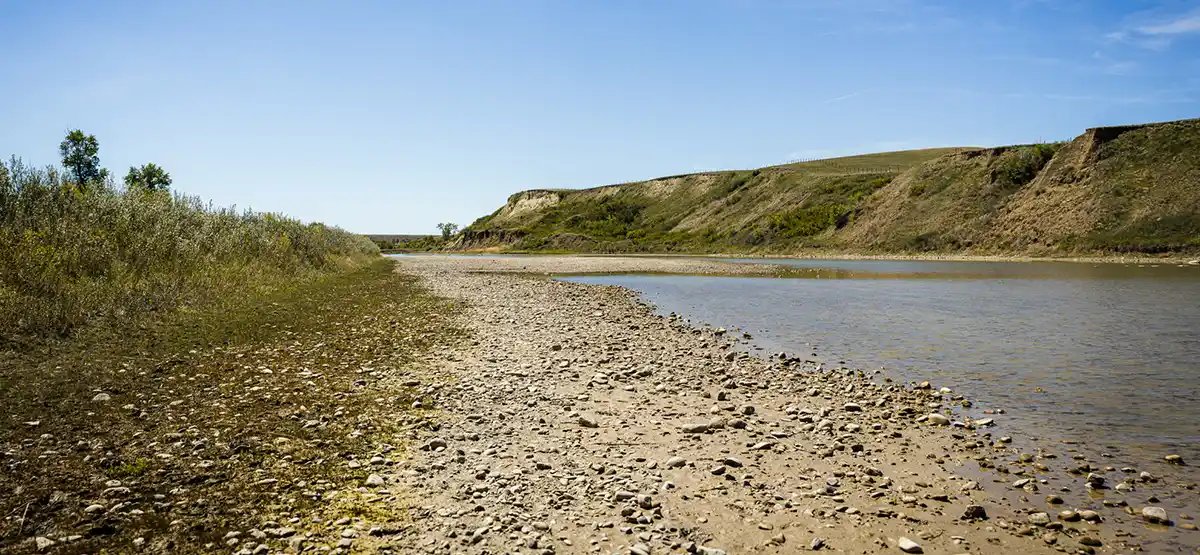
Belly River in Oldman watershed showing low water levels in May 2025

Report: New study highlights water security fears in south

Report: Southern Alberta residents speak up about groundwater concerns in new report

Living Lakes Canada


With 31 water shortage advisories in effect across Alberta as of Aug. 18, water security remains a pressing concern despite above normal summer rain in southern regions. In watersheds such as the Oldman, forecasts range from average to much below average water supply, and years of severe drought have heightened these concerns.

In recent community meetings and a public survey focused on groundwater, southern Alberta residents voiced their priorities around understanding and protecting this vital freshwater source.

Co-led by Living Lakes Canada and the Oldman Watershed Council, in collaboration with the Piikani Nation Lands Department, the Alberta Groundwater Program aims to build a community-based monitoring network to strengthen groundwater management and support sustainable water use. The program blends Western science with knowledge, both Indigenous and non-Indigenous, to help identify priority locations for monitoring.


Maggie Finkle-Aucoin discussing groundwater concerns with community members in Pincher Creek

Living Lakes Canada’s Maggie Finkle-Aucoin discussing groundwater concerns with community members during the Pincher Creek public meeting. The Alberta Groundwater Program held three public meetings in spring 2025 to gather input on groundwater priorities and concerns.

Living Lakes Canada photo

Community engagement is at the heart of the program. In spring 2025, three public meetings were held in Pincher Creek, Lethbridge and online, complemented by an online survey to gather broader input. The program also engaged with the Piikani Nation community to better understand priorities and concerns. Participants represented a range of backgrounds and sectors, including educators and non-profit workers, agriculture and land use managers, Indigenous leaders and government.

The feedback revealed strong, region-wide concern about groundwater. More than 70 per cent of survey respondents said they are “very concerned” about groundwater in Alberta, and a combined 97 per cent said improving understanding of groundwater is either “very important” or “important.”

Top concerns from both the meetings and survey included drinking water access, contamination risks from industry (such as oil, gas and mining), water use for irrigation and livestock, and ecosystem health.

“We are in a drought cycle. There is very little snowpack in the mountains to recharge the groundwater, possibly affecting our only water source. As a primary producer, water is essential for our animals, household and gardens,” said one participant.

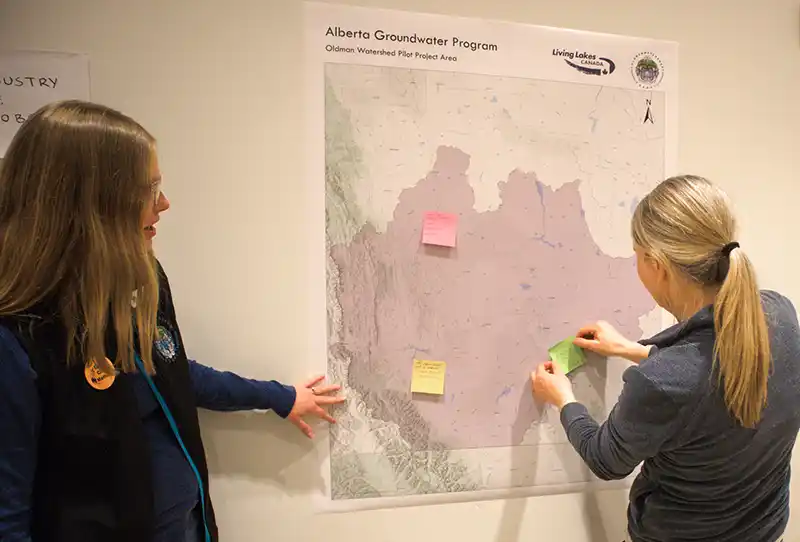
Meeting participants were invited to mark locations of concern on watershed maps. Hotspot areas of concern include Pincher Creek, Crowsnest Pass, Lethbridge and extend through other communities such as Stavely, Vulcan, Cardston and Twin Butte.


Shannon Frank and community member during groundwater mapping exercise in Lethbridge

Shannon Frank, executive director of the Oldman Watershed Council, alongside a community member during the groundwater mapping exercise in Lethbridge. Participants marked locations of concern on watershed maps as part of the Alberta Groundwater Program’s community engagement process.

Living Lakes Canada photo

“Our community has minimal information on groundwater availability to support our long-term community needs,” said another participant.

Lethbridge-based Anne-Marie Lefebvre, Living Lakes Canada’s Alberta Groundwater Program co-ordinator, emphasized the commitment to water stewardship:

“People in this region are deeply passionate about safeguarding water for future generations. Ranchers, farmers and entire communities’ livelihoods depend upon a reliable and secure water supply. This project helps to link science and community water security needs and priorities for the long-term.”

Based on the input received through the public engagement process, Living Lakes Canada and the Oldman Watershed Council is developing a shortlist of monitoring well sites using both community-identified priorities and scientific criteria, including findings from the aquifer vulnerability assessment and data gap analysis.

Final site selection is expected in late summer or early fall 2025, followed by the launch of monitoring and community workshops.

Read the full community engagement report at www.livinglakescanada.ca/abgroundwater.


Shootin’ the Breeze welcomes your voice.

The Breeze Mailbox is a space for sharing thoughts, stories, and conversations about what matters locally — from letters and opinion pieces to news releases and reader notes.

The views expressed here are personal and don’t necessarily reflect those of our team or ownership, but we believe in making space for respectful dialogue and community perspective.

Submission guidelines:

  • Keep it under 800 words
  • Include your full name and contact info
  • Be respectful and constructive

We reserve the right to edit for clarity, length and tone

Have something to share? We’d love to hear from you. Send your submission to publisher@shootinthebreeze.ca.


Agriculture and Rural Life, Alberta | AB, Alberta First Nations, Alberta Groundwater Program, Alberta water, Alberta Water Shortage Advisory, Cardston – Alberta, Crowsnest Pass – Alberta, Environment, Lethbridge – Alberta, Living Lakes Canada, Natural Hazards and Disasters, Oldman Watershed – Alberta, Piikani Nation | Brocket – Alberta, Piikani Nation Lands Department – Alberta, Stavely – Alberta, Twin Butte – Alberta, Vulcan – Alberta

Three water droplets fall above a calm blue water surface. The text reads, "Stage 1 Water Restriction," next to the M.D. of Pincher Creek logo.

MD of Pincher Creek issues water use limits as reservoir drops

Stage 1 water restriction issued for parts of MD of Pincher Creek

The Municipal District of Pincher Creek has declared a Stage 1 water shortage, citing low and declining water levels in the Oldman Reservoir, lack of remaining snowpack and high seasonal demand.

Announced July 14, the restriction applies to the hamlets of Lundbreck and Beaver Mines, Castle Mountain Resort, the Village of Cowley and all rural users connected to the MD’s regional water system. The measures are designed to reduce water use through limited but scheduled outdoor activities.

Under the MD’s Water Shortage Response Plan, the following rules now apply:

Manual lawn watering and aesthetic garden sprinkling
–Allowed only between 6 a.m. and 10 a.m., and 7 p.m. and 11 p.m.
–Odd-numbered addresses: permitted on Monday, Tuesday, Thursday and Saturday
–Even-numbered addresses: permitted on Tuesday, Wednesday, Friday and Sunday

Automatic sprinkling systems
–Permitted only between midnight and 6 a.m.
–Odd-numbered addresses: permitted on Monday, Tuesday, Thursday and Saturday
–Even-numbered addresses: permitted on Tuesday, Wednesday, Friday and Sunday

Drip irrigation and hand watering
–Allowed any day of the week
–Only between 6 a.m. and 10 a.m., and 7 p.m. and 11 p.m.

Watering of new lawns and landscaping
–Allowed any day
–Water only between 6 a.m. and 10 a.m., or 7 p.m. and 11 p.m.

Filling decorative fountains, water features, hot tubs and pools
–Permitted only twice per week
–Days allowed: Wednesday and Sunday

Washing outdoor surfaces and vehicles 
–Washing of driveways sidewalks, decks, cars, boats, etc., is permitted any day
—Use of brush and bucket, spring-loaded nozzle and/or wand washer permitted

Essential watering
–There is no restriction of watering of personal food gardens
—Residents are encouraged to water during permitted hours: 6 a.m. to 10 a.m., or 7 p.m. to 11 p.m.

Essential water use 
–Use of water for drinking, sanitation, cooking, cleaning, laundry and personal cleaning is not restricted
—Residents are encouraged to water during permitted hours: 6 a.m. to 10 a.m., or 7 p.m. to 11 p.m.

The MD asks all residents to use water wisely during the restriction and to follow the outlined schedule to help protect regional water supplies. For full details and updates, visit the MD’s website.

Alberta | AB, Alberta water, Beaver Mines – Alberta, Cowley – Alberta, Drought, Municipal Councils | Governments, Natural Hazards and Disasters, Oldman Watershed – Alberta

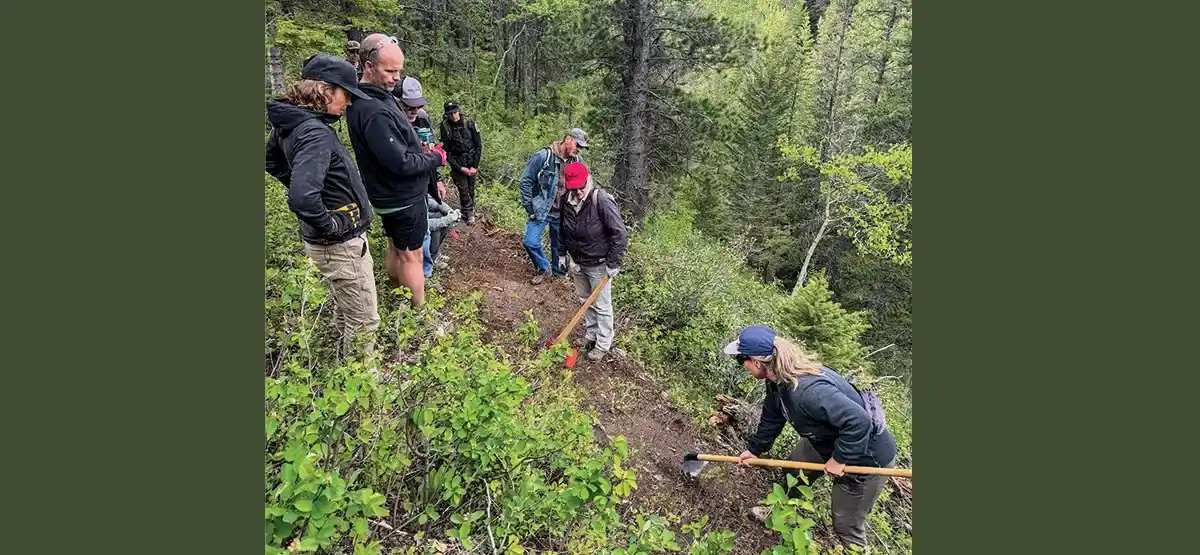
A group of people in outdoor clothing use tools to work on a forest trail, surrounded by green foliage and trees. Some are digging while others observe or stand nearby.

Stewardship Day unites Crowsnest Pass trail users

Volunteers unite in support of public lands during Ed Gregor Stewardship Day in Crowsnest Pass

This year, June 7 marked a day of community spirit, environmental care and hands-on action as nearly 100 volunteers gathered for Ed Gregor Stewardship Day, an event dedicated to improving and preserving the public lands of Crowsnest Pass.

The stewardship event was first held roughly 30 years ago, launched in honour of the late Ed Gregor, a former Alberta forestry employee and resident of Crowsnest Pass known for his commitment to responsible land use and recreation.

Under clear blue skies and with near-perfect weather conditions, volunteers from across southern Alberta rolled up their sleeves for a full day of trail work, invasive-species removal, riparian restoration, and more.

“This is an opportunity for anybody who uses public lands to come together with fellow recreation users and improve our wild spaces,” says Jenice Smith, Alberta Hiking Association’s Crowsnest project co-ordinator. 

“It’s one of the few chances for all types of user groups to gather around the same table with one shared purpose.”

After meeting at the Blairmore ranger station for a free breakfast, courtesy of the Coleman Lions Club, volunteers set out to tackle a number of projects across public lands.

The diverse array of projects included garbage pickup, removal of invasive weeds, repairs to hitching posts and fences, and a variety of trail-focused efforts.

Trail work included bridge redecking and willow staking to protect sensitive riparian zones, improvement and material staging work on a hiking trail near Allison Falls, and key upgrades to improve safety and sustainability on a mountain bike trail.

“These are legacy projects that you can see the results of by the end of the day — trucks filled with weeds and garbage, repaired fences and bridges, new trails. It’s something everyone involved can be proud of,” Jenice says.

A large portion of the event’s success should be credited to the wide network of community and conservation groups that came together to improve public lands.

Participating organizations included:

Hillcrest Fish and Game, Great Divide Trail Association, Alberta Hiking Association, Crowsnest Forest Stewardship Society, Crowsnest Conservation Society, Oldman Watershed Council, Alberta Invasive Species Council, FireSmart Alberta, Crowsnest Snow Riders, Crowsnest Quad Squad, United Riders of Crowsnest, Freshwater Canada, Crowsnest Nordic and the Municipality of Crowsnest Pass.

Many of these organizations not only offered manpower but also helped co-ordinate project planning, approvals and safety. 

“We work together as a group to identify stewardship opportunities and ensure everything is done with the proper approvals in place,” Jenice says.

A full day of work was capped with a communal supper provided by the Blairmore Lions Club, prize draws, and recognition of the youngest and oldest participants — a nod to the intergenerational spirit of the event.

Given the number of residents and organizations that saw to the success of this year’s Ed Gregor Stewardship Day, Jenice couldn’t help but emphasize their shared impact in making the event a major win for the area.

“It’s inspiring to see people who’ve never picked up a trail-building tool before working side by side, from young kids, to seniors, to families, all helping to protect the places they love,” she says. 

“Ed Gregor Stewardship Day is just one day, but the impact lasts much longer.”

Jenice hopes the momentum generated by this year’s stewardship day will carry over into next year, with more outdoor enthusiasts and user groups willing to join for future editions.

Those looking to continue the momentum in the meantime are encouraged to join the Alberta Hiking Association for one of its trail-building volunteer opportunities throughout the summer.

“This is how we give back to the land,” Jenice says. “It’s how we ensure that trails, forests, and waterways are still there for our kids and grandkids.”


Alberta | AB, Alberta Hiking Association, Alberta Invasive Species Council, Blairmore Lions Club, Coleman Lions Club – Crowsnest Pass, Crowsnest Conservation Society – Crowsnest Pass, Crowsnest Forest Stewardship Society – Crowsnest Pass, Crowsnest Nordic – Crowsnest Pass, Crowsnest Pass – Alberta, Crowsnest Pass Events and Entertainment, Crowsnest Quad Squad – Crowsnest Pass, CrowSnow Riders – Crowsnest Pass, Ed Gregor Stewardship Day, Environment, Events and Entertainment, Fire Prevention | Emergency Preparedness, Freshwater Canada, Great Divide Trail Association – Alberta, Hillcrest Fish and Game – Crowsnest Pass, Invasive Species, Jenice Smith – Crowsnest Pass, Land Use, Recreation, United Riders of Crowsnest | UROC – Crowsnest Pass

Boos, cheers and pointed questions

Emotions flare at coal town hall with Danielle Smith, ministers

“You took us down!”

“What about the back room deal?”

Voices shouted in protest, fists pounded on chairs and anti-mining placards waved in the air at the Fort Macleod community hall as Premier Danielle Smith stepped to the podium June 11 to face sharp scrutiny over Alberta’s coal future.

Dozens stood along the walls, while others shifted in their seats — arms crossed, eyes fixed, waiting. What followed was a tense, often emotional exchange between Albertans worried about their land and leaders promising a balanced path forward for coal development.

The town hall came on the heels of the Alberta Energy Regulator’s decision to approve Northback Holdings’ application to begin coal exploration at Grassy Mountain, nestled in the Eastern Slopes of the Rocky Mountains. For many residents, it felt like déjà vu — a renewed push into territory long considered ecologically sensitive.

Premier Smith was joined by Energy and Minerals Minister Brian Jean, Environment and Protected Areas Minister Rebecca Schulz, Agriculture and Irrigation Minister RJ Sigurdson, and Livingstone-Macleod MLA Chelsae Petrovic.

Audience members booed, applauded, shouted and pressed their leaders on the integrity of scientific studies, the sincerity of public consultation and the long-term consequences of mining development in one of Alberta’s most iconic landscapes.

For more than the scheduled two hours, panel members defended the province’s evolving coal policy in the face of visible distrust.

Smith opened the meeting by distancing her government from the policy mess she says it inherited, referencing a $14-billion lawsuit filed by multiple coal companies after leases were cancelled under the previous government.

“What we’re trying to do is to try to find a common ground in a way that certain projects can go ahead with a responsible, modernized policy, using best practices,” she said.

Smith emphasized that Alberta’s updated approach to coal was shaped by consultations with more than 30,000 Albertans.

The focus, she said, includes a comprehensive approach: incorporating Indigenous perspectives, ensuring balanced land use, reviewing tenure and royalty structures, and enforcing rigorous project assessments.

Among the promises: a ban on mountaintop removal and open-pit mining, stronger water protections, and a commitment to use the “best available techniques” to manage environmental risk.

Much of the room, however, wasn’t buying it.

When Smith pointed to Northback’s proposal as a possible example of responsible development, several audience members raised concerns about selenium contamination and questioned the credibility of the technology promised to keep water clean.

To this, Jean responded by pointing to how much science has evolved.

“Twenty, 30 years ago, did we even know selenium was an issue? We didn’t,” he said.

The province, he said, is trying to do everything that keeps the residents safe.

“We continue to monitor, continue to listen to the experts and continue to get evidence.”

That reassurance didn’t sit well with a rancher from Pincher Creek. During the question-and-answer session, he raised concerns about the coal policy threatening multigenerational agricultural livelihoods dependent on clean water.

Addressing the issue, Smith acknowledged the region’s spring drought and emphasized that water-quality thresholds remain well below harmful levels.

“For Tent Mountain, where there’s a higher selenium level, the runoff is still testing at 1.3 micrograms per litre — far below the safe drinking water level of 50 micrograms,” she said.

She further said that Grassy Mountain has significantly lower selenium levels, and companies are being encouraged to avoid mountaintop removal in favour of underground mining, which causes less weathering and therefore less selenium release.

“If you don’t disturb the surface, then you’re going to have less impact on air, water and the land,” she said.

But some in the crowd pointed to recent fish-tissue studies showing selenium levels already exceeding federal guidelines in Crowsnest Lake.

Jean added that scientists found fish of all ages in the monitored lake, suggesting reproduction has not yet been impacted, though studies are ongoing.

“We continue to monitor, continue to listen to the experts and continue to get evidence,” he said.

Schulz acknowledged the concern and urged for patience.

“Yes, that level is above the fish guideline,” she acknowledged, but stressed that the findings are still undergoing peer review.

“We published that report. That is how much we value transparency.”

Schulz also fielded questions about air quality, pointing to Alberta’s monitoring systems and reiterating Smith’s statement that open-pit and mountaintop mining would not be allowed.

“Just like water, we do maintain our air-quality standards,” she said. “Our regulators are expected to uphold the guidelines that we put in place, and we do monitoring.”

Another speaker shifted the focus to Alberta’s growing outdoor recreation and tourism sector, which could be affected by the coal mining operations.

“Outdoor recreation is a very big part of our future, and I think we’ve got a great opportunity to do that,” Jean responded, citing a reclaimed mine near Edmonton that residents now want to convert into a public park.

“Those folks want to donate it to the people of Edmonton, so they can use it for a recreational area,” he said. “They cleaned up the tailings pond so it can be used for fishing and swimming, because the community wants to use it.”

A member of the Blackfoot community asked about Indigenous consent and economic participation.

Jean responded that consultation would be central to the policy.

“We need to do it right, and we’re going to do it right,” he said.

Besides contamination, water scarcity was another flashpoint and Sigurdson acknowledged the burden placed on ranchers and irrigation districts during recent drought conditions.

“That’s why we’re investing so much in irrigation and water storage,” he said. “We’re putting hundreds of millions of dollars towards these types of investments that are going to be crucial to provide the stability that we know is necessary to make sure the water is there for farmers and ranchers, as well as our municipalities.”

Schulz added that reducing freshwater use across all industries is a key part of Alberta’s resource strategy.

Although the tone of the meeting was largely adversarial, a few in the audience expressed gratitude for the panel’s presence.

One attendee questioned why opposition was so vocal when about 72 per cent of Crowsnest Pass voters had supported the Grassy Mountain coal mining project in a 2024 plebiscite.

But for most, skepticism lingered. As the meeting wrapped up, attendees filtered out of the hall still debating whose voices are truly being heard, and what it will mean for the headwaters, hills and history of the Eastern Slopes.

The evening didn’t offer final answers. But it did make one thing clear: coal remains a deeply divisive issue in southern Alberta — and Albertans are far from done talking about it.


Alberta | AB, Alberta Energy Regulator AER, Alberta Envrionment, Alberta First Nations, Alberta Fish, Alberta water, Brian Jean – Government of Alberta, Coal Mining, Crowsnest Lake – Alberta, Crowsnest Lake Selenium, Crowsnest Pass – Alberta, Crowsnest Pass Mining, Drought, Environment, Evolve Power | Montem Resources, Fort Macleod – Alberta, Indigenous Perspectives, Livingstone Macleod – Alberta, Natural Hazards and Disasters, Oldman Watershed – Alberta, Rebecca Schulz – Government of Alberta, Resource Development, Selenium contamination, Tent Mountain Coal Mine

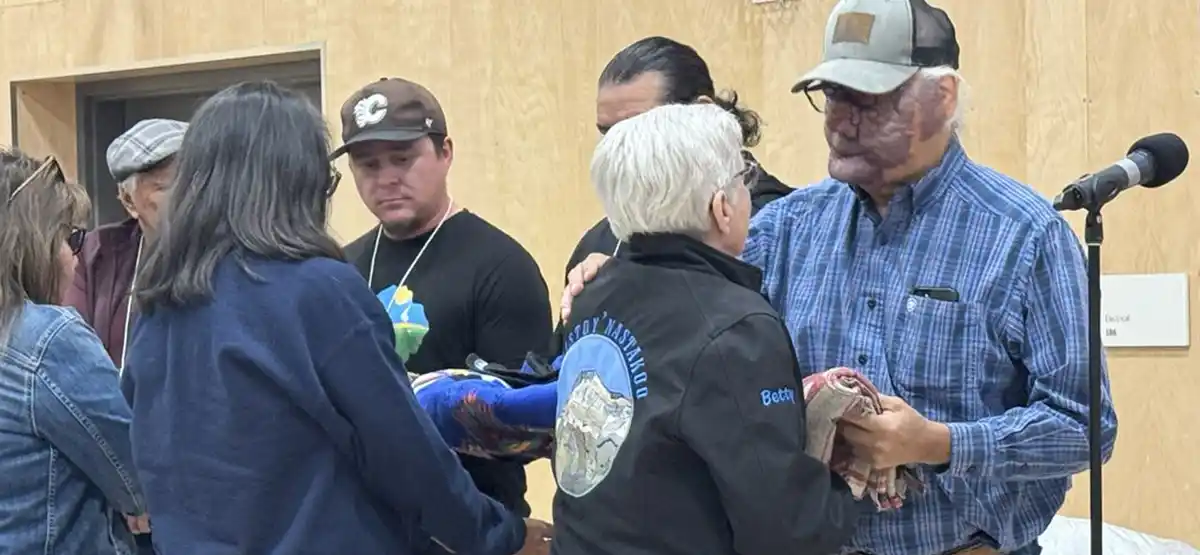
A group of people gather indoors as an older man in a cap and plaid shirt receives a folded blanket and a gift, while others stand nearby, some wearing jackets with mountain designs. A microphone is visible to the right.

KEPA Summit focuses on environment and culture

The 11th annual Kainai Ecosystem Protection Association (KEPA) Summit was held last week and consisted of three days of learning from Indigenous Knowledge Keepers and Elders, along with others who care for the land.

The theme for this year is Ksaahkomma ki Sokinaapi-Environment and Health and hosted several panelists, including schools located on the Kainai Reserve and the Blackfeet Community College.

The summit began on Wednesday at the Aahsotapi Elementary School in Lavern, which recently opened for the 2024/2025 school year.

The summit was opened with a pipe ceremony led by Elders Peter Weasel Moccasin and Mike Bruised Head.

Following the pipe ceremony, Charlie Crow Chief (Mai’stonia) co-founder of KEPA and designer of the KEPA Flag and Lodge (tipi) was honoured and it was announced there will be a scholarship in his name at the University of Lethbridge.

The first speaker of the first day was Dan Fox, who spoke about Iinii (bison) harvesting. He said he was introduced to bison in 2003 after dealing with health issues. He was told by his mother and other elder ladies that many of their people were too quick to jump into western medicine.

“They said ‘us native people were too fast to jump into western medicine’…. they said, ‘we travel too fast to get instant gratification in western medicine.’”

He then researched how to range his own bison and began harvesting them in 2006. During his first harvest, one of the Iinii ran off as he shot another one, and he was instructed by his elders to pray over the Iinii before it was shot. So the next morning he went back and did a ceremony before killing the first bison and the other one stood there, as if it was mourning his friend, instead of running off.

Fox has held many harvests since, often in early fall, as a way to teach the young ones and others who want to know about Nisitapi (Blackfoot) ways of knowing and says he’s honoured to share the teachings with others.

Students from the Tatsikiisaapo’p Middle School hosted a panel talking about what they learn in school, which includes traditional teachings alongside the Alberta curriculum.

They spoke about the interconnectedness between the land and people and how it’s important to show respect towards the land.

They closed off with a performance of Tsahkoomii (Earth Song) along with Olivia Tailfeathers, which can be viewed on the Herald’s Instagram account (@leth_herald).

There were also Panels from both Kainai High School and Red Crow College echoing their connectedness to the land and the importance of Blackfoot teachings within their education.

Before the closing remarks, Shannon Frank, executive director of the Oldman Watershed Council, spoke about the importance of the watershed, and the Oldman River, to the environment.

Frank said last year was one of the worst droughts they have seen in many years and this year is continuing to be a dry year.

“Right now, we are in a Stage 3 drought; we’re actually the only watershed that is in a Stage 3 drought, there’s only five stages, (Stage) 5 is full on emergency, so (Stage) 3 is pretty scary.”

She added the reservoir, which distributes water to many farmers and municipalities throughout southern Alberta, is only 69 per cent full and it likely won’t fill up barring some “serious rainfall.”

To help protect the watershed, which acts like a barrier in times of harsh conditions such as excessive moisture and drought, they have planted several trees along the river. The Oldman Watershed Council has also built bridges along the rivers to prevent of road vehicles from ruining the riverbanks.

Thursday was a “choose your own adventure” with elders being present at Hoyt Tipi Rings, Writing on Stone and cultural demonstrations at Red Crow Park.

The demonstrations included archery and atlatle throwing, which is similar to archery but done with a wooden plank and arrow.

A Guatemalan group shared their knowledge of the Mayan Calendar, which is a 260 day calendar that has different energies each day and is viewed in a counter clockwise circle rather than linear.

Alberta | AB, Alberta First Nations, Cultural Perspectives, Indigenous Elders | Knowledgekeepers, Indigenous Perspectives, Kainai Ecosystem Protection Association | KEPA, Kainai Nation | Blood Tribe – Alberta, Lethbridge Herald – Alberta, Mike Bruised Head – Kainai Nation, Peter Weasel Moccasin – Kainai Nation